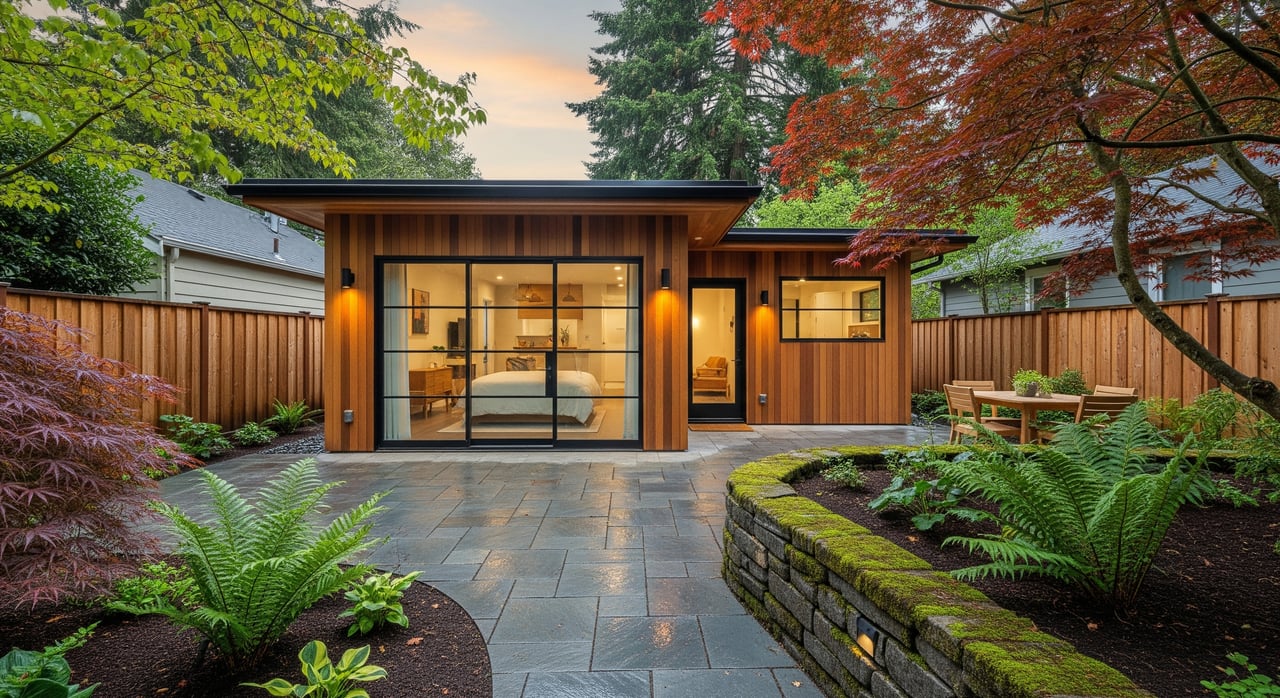
Thinking about adding an ADU in Portland to create space for family or earn rental income? You are not alone. ADUs are popular across the city, but understanding what you can build, how permits work, and what it may cost can feel overwhelming. In this guide, you will learn the key rules, the main ADU options, timelines and budgets to expect, and how to vet a property for ADU potential so you can move forward with confidence. Let’s dive in.
What counts as an ADU in Portland
An accessory dwelling unit is a smaller, independent home on the same lot as a primary residence. In Portland, common ADU formats include:
- Detached backyard cottage
- Attached ADU added to the main home
- Conversion ADU, such as a basement or garage conversion
- Junior ADU, also called a JADU, which is a compact unit created within the existing house
Most single-unit residential lots can add an ADU, and in many cases a JADU may be allowed as well. The final answer depends on your specific zoning and any overlays on the property. Size caps, height, setbacks, and lot coverage rules apply, so plan to verify your parcel’s allowances with city permitting staff before you design.
Your main ADU options and typical footprints
Garage conversion
- Typical size: about 200 to 600 square feet
- Why choose it: Often the most cost-effective route if the structure is sound and you can meet egress and insulation requirements.
- Watchouts: Foundation upgrades, ceiling heights, and moisture control can add cost.
Basement or attic conversion
- Typical size: about 300 to 900 square feet
- Why choose it: Uses existing space, keeps yard open, and can deliver strong rental potential.
- Watchouts: Code compliance for ceiling height, emergency exits, and ventilation can be decisive.
Attached addition
- Typical size: about 400 to 1,000+ square feet
- Why choose it: Flexible layouts and direct utility tie-ins to the main home.
- Watchouts: Structural tie-ins and new foundations increase complexity.
Detached backyard cottage
- Typical size: about 400 to 1,000+ square feet
- Why choose it: Privacy and strong rental appeal, with popular one-bedroom layouts in the 400 to 800 square foot range.
- Watchouts: New utilities, foundations, stormwater, and site work drive cost.
Junior ADU (JADU)
- Typical size: up to about 500 square feet inside the existing home
- Why choose it: Efficient and smaller in scope, often with shared systems.
- Watchouts: Compact kitchenettes and shared elements have specific rules, so confirm details early.
Zoning and site rules to check first
Base zoning and overlays
Your base zone sets the starting rules for what you can build. Overlays can change the path. Historic districts, design overlay zones, and environmental overlays often require extra review. That added review can extend your timeline and design costs, so budget for it from the start.
Size, height, setbacks, and lot coverage
Portland uses size caps and residential development standards. Detached ADUs typically face lower height limits than main houses, and setbacks govern where you can place the building. Lot coverage limits can shape your footprint, especially on smaller parcels. A site plan that maps property lines, existing structures, and trees will help you understand your buildable area.
Parking
Portland has relaxed off-street parking requirements for ADUs in many residential zones. The specific rules depend on your zoning and overlays. Confirm current requirements for your parcel before finalizing design.
Trees, topography, and stormwater
Protected trees can drive design choices or require mitigation. Steep lots may need geotechnical input. Added impervious surface can trigger stormwater management measures like infiltration or rain gardens. These items can materially affect costs and timing.
The Portland ADU permitting path
Pre-design feasibility
Start with the basics. Confirm zoning, overlays, and lot lines. Locate your sewer lateral and water service, and check for easements. Note any significant trees and slopes. These early checks help you choose the most viable ADU type and avoid surprises later.
Design and documentation
Plan to prepare a clear site plan and building plans. Detail floor plans, elevations, structural and foundation information, energy and insulation details, and mechanical, electrical, and plumbing layouts. Some sites call for technical reports, like an arborist memo or stormwater plan.
Permit application and reviews
You will apply for a building permit with the City. Trade permits for plumbing, electrical, and mechanical are usually separate. If your property sits in a design or historic overlay, you may need a design review or historic review. Other agencies, including water and environmental services, may review your plans when relevant.
Inspections and occupancy
Expect standard inspections during construction. When the ADU passes final inspection, you will receive approval for occupancy. At that point, you can rent the unit or use it for multigenerational living, subject to local rental rules.
How long it usually takes
- Simple conversions with minimal structural changes: permitting can move in weeks to a few months, depending on workload.
- New detached ADU or larger additions: permit review often takes about 1 to 4 months.
- Design or historic review: add 2 to 6 months or more to the schedule.
- End-to-end average for a straightforward detached ADU: plan for about 6 to 12 months from planning through construction. Complex sites and overlay areas can take 12 to 18 months or longer.
What an ADU may cost in Portland
Prices vary by scope, finishes, and site conditions, but regional data suggests these planning ranges:
- Interior conversion, such as a garage or basement: about $50,000 to $150,000 or more
- Attached addition: about $150,000 to $300,000 or more
- New detached ADU: commonly about $150,000 to $400,000 or more, with many one-bedroom projects landing near $200,000 to $350,000
Square-foot costs vary widely. Conversions can run about $150 to $300 or more per square foot. New detached builds often range from about $250 to $500 or more per square foot, depending on design and finishes. Site work, utility runs, stormwater measures, and tree mitigation are common budget drivers. Plan review fees, inspection fees, and possible system development or connection charges also factor in, so verify current fee policies before you finalize a budget.
Financing paths owners use
- Cash or savings
- Home equity line of credit or home equity loan for owner-occupied properties
- Construction loan or renovation construction loan that converts to a mortgage
- Single-close construction-to-permanent loans when available
- Renovation loan programs, such as FHA 203(k) or Fannie Mae HomeStyle Renovation, depending on lender and project specifics
Talk with a lender early to match the loan type to your timeline and scope. If you plan to rent the ADU, build a conservative cash flow model that accounts for mortgage or loan payments, maintenance, insurance, utilities, and vacancy.
Rental rules and income planning
ADUs are often rented long term in Portland. Short-term rentals have additional restrictions and host licensing, so most owners plan for standard residential leases. Rents vary by neighborhood and unit size. Studio and one-bedroom layouts are common choices for steady demand. Evaluate potential income against your total project cost and ongoing expenses.
How to vet a property for ADU potential
Use this quick checklist when you tour homes or review listings:
- Confirm zoning and overlays. Make sure an ADU or JADU is allowed on the parcel.
- Look for conversion candidates. Detached garages, unfinished basements, or carriage houses can lower costs.
- Measure buildable area. Check setbacks, easements, and lot coverage limits.
- Locate utilities. Find the sewer lateral and water service. Long utility runs add cost.
- Scan for protected trees and slopes. These can trigger added reviews and mitigation.
- Check permit history. Unpermitted work can complicate new permits.
- Research local rent comps. Understand demand for small units in the area.
- Scope the likely permitting path. Decide between conversion, attached addition, or detached new build.
Common pitfalls to avoid
- Unpermitted structures that require costly retrofits to meet code
- Historic or design overlays that add design requirements and time
- Underestimated site work, including stormwater and utility upgrades
- Protected trees, steep lots, or retaining walls that change scope
- Rapid policy updates that affect fee schedules or size limits
Early feasibility, a realistic budget, and a clear design package are your best tools for a smooth project.
A simple ADU timeline you can expect
- Pre-design and feasibility: about 2 to 6 weeks
- Design and permit application: about 4 to 16 weeks or more
- Construction: about 8 to 36 weeks, depending on scope and contractor schedule
Building in Portland means city workload and review steps can vary, so allow some buffer.
Your next step
An ADU can unlock flexibility, support multigenerational living, and add long-term value, but the best outcomes start with good information. If you are evaluating a property in Portland or nearby communities and want a second set of eyes on ADU potential, our team can help you weigh zoning, timelines, and likely costs so you make a confident move. Reach out to Harcourts Elite to talk through your goals and get a practical plan.
FAQs
What types of ADUs are allowed in Portland?
- Portland commonly allows detached backyard cottages, attached ADUs, conversion ADUs like basements or garages, and smaller Junior ADUs created within the existing home, subject to zoning and overlays.
How long does it take to permit and build an ADU in Portland?
- Simple conversions may permit in weeks to a few months, while new detached ADUs often need 1 to 4 months for review, with total timelines of about 6 to 12 months for straightforward projects.
How much does a typical Portland ADU cost?
- Planning ranges often run about $50,000 to $150,000 for conversions, $150,000 to $300,000 for attached additions, and $150,000 to $400,000 or more for new detached builds, depending on scope and site.
Can I rent my ADU in Portland right away?
- After final inspections and occupancy approval, you can rent long term; short-term rentals have separate rules and licensing, so confirm those before listing.
Will an ADU raise my property taxes in Multnomah County?
- Adding habitable square footage often increases assessed value; check Multnomah County assessor guidance to understand how your project may be assessed.
Do I need off-street parking for an ADU in Portland?
- Portland has relaxed parking requirements for ADUs in many residential zones, but details vary by parcel, so confirm current rules for your property.
Do ADUs in Portland require separate utility meters?
- Some ADUs share services and others require separate metering; policies vary by utility, so check with the water and other providers during feasibility.